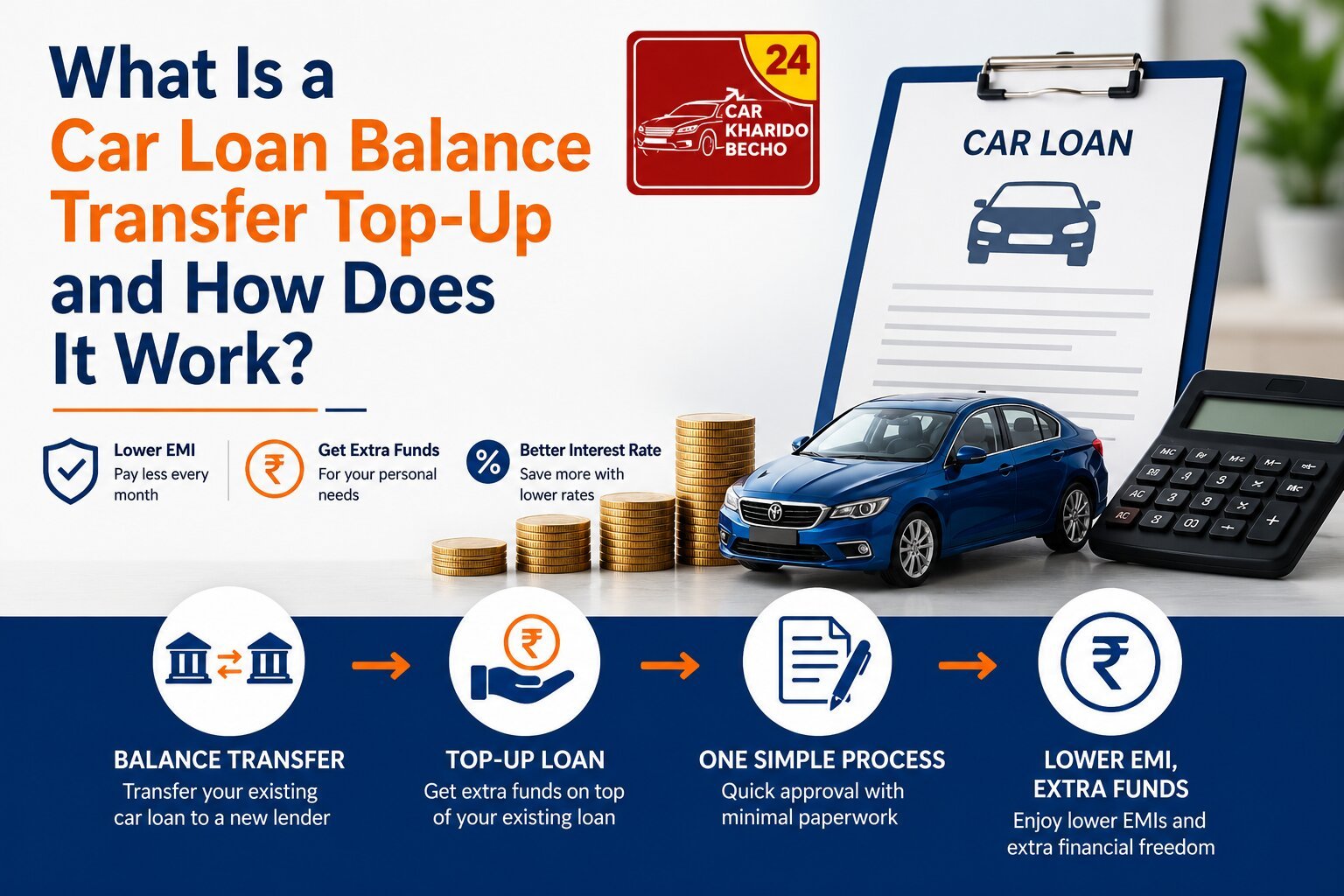
What Is a Car Loan Balance Transfer Top-Up and How Does It Work?
Managing a car loan becomes easier when you have the option to reduce your financial burden while also accessing additional funds when needed. Many borrowers are unaware that they can not only transfer their existing car loan to another lender but also borrow extra money through the same process. This financial solution is known as a car loan balance transfer topup.
Whether you need funds for personal expenses, vehicle upgrades, medical emergencies, or business requirements, a car loan balance transfer topup can help you achieve your goals while potentially lowering your monthly EMI. Understanding how this facility works can help you make smarter financial decisions and improve your overall loan experience.
What Is a Car Loan Balance Transfer Top-Up?
A car loan balance transfer topup is a financial facility that allows you to transfer your existing car loan from your current lender to another lender offering better loan terms. Along with transferring the remaining outstanding loan amount, the new lender also provides an additional loan amount based on your eligibility.
In simple words, it combines two benefits into one:
Transfer your existing car loan to another lender.
Receive additional funds without applying for a separate personal loan.
This option is quite more helpful for borrowers who have kept up a steady repayment history, and they also happen to own a vehicle with enough market value to cover things.
Work Process of a Car Loan Balance Transfer Top-Up in Bhumi Finance
The process is relatively straightforward.
First, the new lender evaluates your existing loan, including the outstanding balance, repayment history, vehicle age, and current market value. They also assess your income, employment stability, and credit score.
Once your application is approved, the new lender pays off the remaining balance of your old car loan directly to your current lender. Your loan account with the previous lender is then closed.
At the same time, the new lender sanctions an additional loan amount, known as the top-up. You then repay the combined amount according to the new loan agreement, which may come with a revised interest rate, EMI, and repayment tenure.
Benefits of a Car Loan Balance Transfer Top-Up
Lower Interest Rates
One of the biggest advantages of a car loan balance transfer topup is the opportunity to secure a lower interest rate. If interest rates have decreased since you took your original loan or another lender offers more competitive rates, transferring your loan can significantly reduce your EMI and overall borrowing cost.
Additional Funds Without a Separate Loan
Instead of applying for a personal loan, which often carries higher interest rates, you can obtain extra funds through the top-up facility. This saves both time and paperwork while offering more affordable borrowing.
Reduced Monthly EMI
Lower interest rates or an extended repayment tenure can reduce your monthly installments, making your finances more manageable.
Flexible Repayment Options
Most lenders offer flexible repayment tenures during a car loan balance transfer topup, allowing borrowers to choose an EMI that suits their monthly budget.
Improved Cash Flow
By lowering your EMI and receiving additional funds, you gain better financial flexibility to manage emergencies, investments, or planned expenses.
What Are the Eligibility Requirements for a Car Loan Balance Transfer Top-Up?
Eligibility for a car loan balance transfer topup may vary depending on the lender, but borrowers generally need to fulfill certain basic requirements. The applicant should have an existing car loan with a good repayment record, as timely EMI payments improve approval chances. A strong credit score, a vehicle that meets the lender’s age and condition criteria, and a stable source of income are also important factors. Also, that leftover loan amount has to sit within the lenders own specified bounds to qualify for the top up facility.
Documents Required
Although documentation may differ slightly between lenders, the following documents are commonly required:
Identity proof likewise (Aadhaar Card, PAN Card, Passport, or Driving Licence).
Address proof.
Income proof (salary slips, bank statements, or income tax returns).
Existing loan account statement.
Vehicle Registration Certificate (RC).
Valid motor insurance documents.
Passport-size photographs.
KYC documents as required by the lender.
These documents can speed up the approval process.
When Should You Consider a Car Loan Balance Transfer Top-Up?
A car loan balance transfer topup is suitable in several situations.
If another lender offers significantly lower interest rates than your current lender, transferring the loan can reduce your borrowing costs.
If you require funds for medical emergencies, education, home renovation, weddings, business expansion, or debt consolidation, the top-up provides an affordable financing option.
If your financial situation has improved since taking the original loan, you may qualify for better loan terms.
Borrowers struggling with high EMIs can also benefit by choosing a revised repayment tenure.
Factors That Affect Approval
Car loan balance transfer topup applications are evaluated based on several factors before they are approved.
Credit Score
The better your credit score, the more likely it is that you will receive better interest rates at any financial institution.
Loan Repayment History
Consistent EMI payments without delays build lender confidence.
Vehicle Value
The current market value of your vehicle plays an important role in determining the top-up amount.
Income Stability
Lenders prefer applicants with stable employment or consistent business income.
Existing Outstanding Loan
The remaining loan amount and repayment tenure also influence eligibility.
Things to Consider Before Applying
Before choosing a car loan balance transfer topup, compare interest rates offered by different lenders and check for processing fees, foreclosure charges, and other applicable costs. Review the total repayment amount instead of focusing only on the EMI, and carefully understand the loan terms and prepayment conditions. A proper comparison will help ensure the transfer saves you money and improves your overall financial position.
Common Reasons People Choose a Car Loan Balance Transfer Top-Up
Many borrowers opt for a car loan balance transfer topup because it serves multiple financial needs at once.
Some want to lower their existing EMI and save on interest costs.
Others need immediate funds without going through the lengthy approval process of a new unsecured loan.
Some borrowers use that extra sum to clear off costly obligations while others put it toward business chances or personal milestones . In a way its like they decide to either escape the weight of expensive debts ,or go for new growth and little celebrations.
The convenience of combining loan transfer and additional financing into a single application makes it an attractive financial solution.
Is a Car Loan Balance Transfer Top-Up Better Than a Personal Loan?
In many cases, yes.
A car loan balance transfer topup is often available at lower interest rates because it is linked to an existing secured asset. Personal loans are unsecured, making them more expensive in terms of interest rates.
Additionally, the documentation process is often simpler since your existing loan history is already available. If you qualify, choosing a top-up can be a more cost-effective way to access additional funds.
However, borrowers should always compare offers from different lenders and evaluate their financial needs before making a final decision.
Conclusion
A car loan balance transfer topup helps you transfer your existing car loan to a new lender while accessing additional funds at competitive interest rates. It can lower your EMI and improve financial flexibility. Before applying, compare lenders, review all charges and repayment terms, and choose the option that best suits your financial needs.
FAQs
1. What is a car loan balance transfer top-up?
A car loan balance transfer topup is a facility that allows you to transfer your existing car loan from your current lender to another lender while getting an additional loan amount. It helps borrowers reduce their EMI burden and access extra funds through a single loan agreement.
2. How does a car loan balance transfer top-up work?
In this process, the new lender pays off your outstanding car loan amount to the existing lender. After completing the transfer, the new lender provides an additional top-up amount based on your eligibility, income, credit score, and vehicle value. You then repay the combined loan amount through revised EMIs.
3. What are the benefits of a car loan balance transfer top-up?
A car loan balance transfer topup offers several benefits, including lower interest rates, reduced monthly EMIs, additional funds without applying for a separate loan, and better repayment flexibility. It can help improve cash flow and make loan management easier.
4. Who is eligible for a car loan balance transfer top-up?
Borrowers with an existing car loan, a good repayment history, a stable income source, and a healthy credit score are generally eligible. The vehicle’s age, condition, and outstanding loan amount also play an important role in approval.
5. What documents do you need for a top up on a car loan balance transfer?
Commonly required documents include identity proof, address proof, income documents, bank statements, existing loan details, vehicle registration certificate, insurance documents, and KYC documents. Requirements may vary depending on the lender.
6. Can I get a lower interest rate through a balance transfer?
Yes, transferring your car loan to another lender may help you get a lower interest rate if the new lender offers better terms. A reduced interest rate can lower your EMI and decrease the total interest paid during the loan tenure.
7. Is a car loan balance transfer top-up better than a personal loan?
In many cases, a car loan balance transfer topup can be a more affordable option than a personal loan because it is linked to a secured asset and may come with lower interest rates. However, borrowers should compare both options before making a decision.
8. How much top-up amount can I get on my car loan?
The additional amount depends on factors such as your income, credit score, repayment history, outstanding loan balance, and the current market value of your vehicle. Each lender has different policies for determining the eligible top-up amount.
9. Does a car loan balance transfer affect my credit score?
Applying for a balance transfer may temporarily affect your credit score due to a credit inquiry. However, making timely repayments on the new loan can help maintain or improve your credit profile over time.