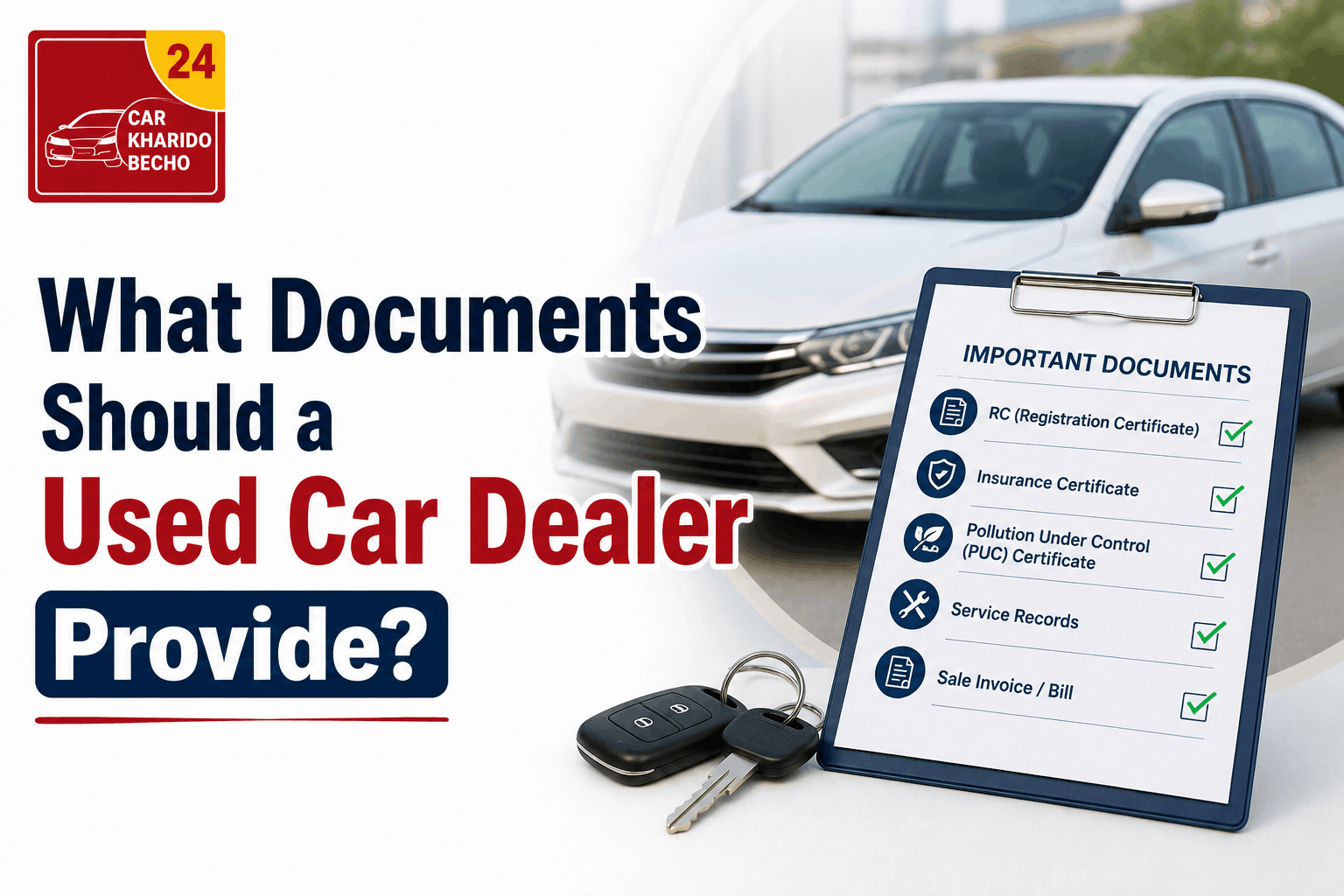
What Documents Should a Used Car Dealer Provide?
Buying a used car can be a smart way to own a reliable vehicle without spending as much as you would on a new one. However, the condition of the car is only one part of the purchase. The paperwork is equally important. Before completing the deal, you should make sure that the dealer provides all the necessary documents and that the information in those documents matches the vehicle you are buying.
A car may look perfect during a test drive, but incomplete or incorrect documents can create problems later. Issues related to ownership, insurance, registration, loans, pending fines, or vehicle history can become the buyer's responsibility if they are not checked properly.
This is why it is important to understand what documents a used car dealer should provide. Whether you are buying from an individual seller or professional used car Dealers in Ghazipur, checking the paperwork can help you make a safer and more confident purchase.
Why Are Documents Important When Buying a Used Car?
Vehicle documents establish the legal ownership and history of a car. They also help confirm that the vehicle being sold actually matches the records maintained by the authorities.
Proper documentation can protect you from several common problems. For example, a car could have an unpaid loan, pending challans, expired insurance, or ownership information that has not been updated. If you fail to check these details before buying, resolving them later can be difficult and expensive.
A responsible dealer should be transparent about the car's documents and allow you enough time to verify them. If a dealer avoids showing important paperwork or gives unclear answers, consider it a warning sign.
Registration Certificate (RC)
The Registration Certificate, commonly called the RC, is one of the most important documents you should receive when buying a used car.
The RC contains important information such as the registration number, owner's name, fuel type, chassis number, engine number, and other vehicle details. You should carefully compare these details with the actual vehicle.
The seller should also provide the necessary paperwork for transferring ownership into your name. Make sure the transfer process is completed according to the applicable Regional Transport Office requirements.
If the vehicle has changed owners before, check the ownership history as well. This can help you understand whether the car has had multiple owners.
Valid Motor Insurance
Every vehicle should have valid motor insurance before it is driven on public roads. When purchasing a used car, ask the dealer for the current insurance policy.
Check the policy's validity, registration number, policy number, insured person's name, and other vehicle details. You should also confirm whether the policy needs to be transferred to your name after purchase.
Do not assume that insurance automatically remains fully valid after ownership changes. Complete the required transfer formalities with the insurance provider.
If the existing policy is close to expiry, factor the renewal cost into your buying decision.
Pollution Under Control Certificate (PUC)
A valid Pollution Under Control certificate confirms that the vehicle has undergone an emissions check and meets the applicable pollution standards.
Ask the dealer for the current PUC certificate and check its validity date. An expired PUC may require you to get the vehicle tested soon after purchase.
While a PUC is a relatively simple document, checking it is part of responsible vehicle ownership.
Sale Agreement or Invoice
A proper sale document is extremely important because it provides written evidence of the transaction.
The dealer should provide an invoice, sale agreement, or other appropriate purchase document containing details of the vehicle, buyer, seller or dealer, agreed price, and transaction date.
Read the document carefully before signing. Make sure the final price matches what you agreed to pay and that any additional charges are clearly mentioned.
Avoid relying only on verbal promises. Important terms related to the purchase should be documented.
Professional used car Dealers in Ghazipur should be able to provide clear purchase-related documentation instead of leaving important details undocumented.
Delivery Receipt
A delivery receipt confirms that the vehicle has been handed over to the buyer.
It can include details such as the vehicle registration number, date of delivery, buyer's name, seller or dealer's name, and vehicle condition at the time of delivery.
Keep a copy of the signed delivery document with your other vehicle records. It can be useful if questions arise about when possession of the vehicle was transferred.
Ownership Transfer Documents
Changing the registered owner is an important step after buying a used vehicle. The dealer should provide or assist with the documents required for ownership transfer.
The exact forms and process can depend on the applicable transport authority and transaction circumstances. Make sure the ownership transfer application is completed correctly and that you receive confirmation or documentation showing the process has been initiated or completed.
Do not consider the deal completely finished simply because you have received the car and keys. The registration records should also reflect the new ownership.
Loan Closure or NOC
If the car was previously purchased through financing, you should check whether the loan has been completely paid off.
If there was a vehicle loan, ask for appropriate proof of loan closure and the lender's No Objection Certificate (NOC), where applicable. This helps confirm that there is no outstanding financial interest attached to the vehicle.
A vehicle with an unresolved loan can create complications during ownership transfer. Therefore, this document deserves special attention when purchasing a financed or previously financed car.
Before making the final payment, ask the dealer directly whether there is any outstanding loan or hypothecation associated with the vehicle.
Service and Maintenance Records
Service records are not always legal ownership documents, but they are extremely useful when evaluating a used car.
A responsible dealer may provide available service invoices, maintenance records, or service history. These records can tell you when the vehicle received routine maintenance and whether major components have been replaced.
Service history can also help you understand how well the previous owner maintained the vehicle.
If the dealer claims that the car has been regularly serviced but cannot provide any supporting records, ask questions before making a decision.
Warranty Documents, If Applicable
Some used cars are sold with a dealer warranty or remaining manufacturer warranty. If a warranty is included in the deal, make sure you receive the relevant warranty terms in writing.
Check what components are covered, how long the warranty remains valid, and what conditions apply.
Do not rely only on statements such as "the car has a warranty." Ask for documentation that explains the actual coverage.
This is particularly important when buying from professional used car Dealers in Ghazipur, as different dealers may offer different warranty programs and conditions.
Challan and Pending Dues
Before purchasing a used car, check whether there are any pending traffic challans, taxes, or other dues associated with the vehicle.
Ask the dealer to clarify whether all outstanding payments have been cleared. Where applicable, obtain supporting proof.
This can help prevent unpleasant surprises after the ownership transfer.
You should also verify that the vehicle's registration and other records are free from issues that could affect the transfer.
Chassis and Engine Number Verification
The chassis number and engine number are important identifiers of the vehicle.
Compare the numbers shown on the documents with the numbers physically present on the vehicle. They should match.
If you notice a mismatch, do not ignore it. Ask the dealer for an explanation and verify the information through the appropriate authority before proceeding with the purchase.
This simple check can help identify documentation problems or other serious concerns.
Should You Check These Things Before Making a Final Payment?
Getting documents from a dealer is not enough. You should also verify the information in them.
Start by matching the registration number, chassis number, engine number, model, and owner's details. Check insurance and PUC validity. Ask about pending loans, challans, and taxes.
Read the sale agreement carefully and confirm the final purchase price. Keep copies of every document provided by the dealer.
If the dealer is handling the ownership transfer, ask for a clear understanding of what they will complete and what you need to do yourself.
When comparing used car Dealers in Ghazipur, documentation should be one of your important selection criteria. A trustworthy dealer should be willing to explain the paperwork and answer reasonable questions about the vehicle's history.
Red Flags to Watch For
Certain situations should make you more cautious. If a dealer refuses to show the original documents, provides only unclear photocopies, gives inconsistent information, or pressures you to make an immediate payment, take a step back.
Be especially careful if the seller cannot explain the ownership history or outstanding loan status.
You should also avoid signing incomplete documents or paying the full amount without understanding what paperwork you will receive.
A professional dealer understands that documentation is an important part of a used-car transaction.
Final Thoughts
Buying a used car is not just about its price or condition. Always check the RC, insurance, PUC, invoice, loan NOC, and service records before completing the purchase.
Reliable used car Dealers in Ghazipur can make the buying process smoother by providing proper documentation and clear information. Verify everything carefully and keep copies of all important documents for future reference.
FAQs
1. What is the most important document when buying a used car?
The Registration Certificate (RC) is one of the most important documents because it confirms the vehicle's registration and ownership details.
2. Should I check the car's insurance before buying?
Yes. Check whether the insurance is valid and verify that the policy details match the vehicle.
3. What is an NOC for a used car?
An NOC, or No Objection Certificate, may be required from the lender when a vehicle loan has been fully repaid.
4. Do I need the PUC certificate?
Yes. Check that the vehicle has a valid Pollution Under Control certificate at the time of purchase.
5. Should a dealer provide a purchase invoice?
Yes. A proper invoice or sale document should clearly record the vehicle and transaction details.
6. Why should I check the chassis number?
The chassis number helps identify the vehicle. It should match the number mentioned in the relevant vehicle documents.
7. Should I ask for service records?
Yes. Service records can help you understand the vehicle's maintenance history and previous repairs.
8. What if the dealer refuses to show original documents?
Treat this as a warning sign. Do not rush into the purchase until the vehicle's documents and ownership details are properly verified.
9. Should pending challans be checked before buying?
Yes. Checking for pending challans and other dues can help you avoid unexpected issues after purchasing the vehicle.
10. How can I choose a reliable used-car dealer?
Compare the dealer's reputation, vehicle condition, pricing, transparency, documentation, and after-sales support before making your decision.